The Toyota Lean Manufacturing Challenge is a practical, industry-led programme designed to introduce Year 11 learners at The JCB Academy to LEAN manufacturing and modern production methods. Delivered in partnership with Toyota specialists, the challenge places learners in realistic manufacturing scenarios that reflect the pace, precision, and standards of a global engineering organisation.
Across the programme, learners apply engineering theory to hands-on tasks, developing problem-solving, teamwork, and efficiency skills that are essential in modern manufacturing environments.
What the Challenge Develops
The challenge is designed to build both technical understanding and professional behaviours. Learners develop:
- An understanding of LEAN manufacturing principles
- Teamwork and communication skills
- Time management and efficiency
- Precision and quality control
- Problem-solving in production environments
These skills directly support progression into engineering, manufacturing, and production management pathways.
A Series of Engineering Challenges
Learners complete a range of engineering-based activities, each designed to embed LEAN manufacturing principles through practical application.
Engine Assembly Challenge
Learners work in teams to assemble an engine against the clock. The challenge demands accuracy, coordination, and clear communication, highlighting the importance of efficiency and quality in manufacturing environments.
Fuel Rail Spacer Manufacturing
Using lathes, learners manufacture a fuel rail spacer, developing hands-on machining skills while gaining an understanding of tolerances, accuracy, and production consistency.
Wind-Powered Car Design and Build
Teams design and construct a wind-powered car, applying engineering and aerodynamic principles. The task encourages creativity while reinforcing structured problem solving and iterative improvement.
LEAN Manufacturing Exercises
Learners take part in a range of interactive activities that explore waste reduction, production flow, quality assurance, and continuous improvement, all key components of Toyota’s manufacturing philosophy.
Introducing LEAN Manufacturing
The challenge begins with expert-led sessions delivered by Toyota specialists. Learners are introduced to LEAN manufacturing and production systems, including efficiency, quality control, material waste reduction, production flow, and budget awareness.
These sessions are closely aligned to engineering curriculum content, allowing learners to see how classroom learning translates directly into industry practice.
Hands-On Learning Activities
Bic Pen Assembly Task
Learners work in small teams to assemble dismantled Bic pens, each taking on a specific role within a production line. After an initial attempt, teams analyse their process, identify inefficiencies, and apply LEAN principles to improve performance. The task demonstrates how structured changes can significantly increase productivity and quality.
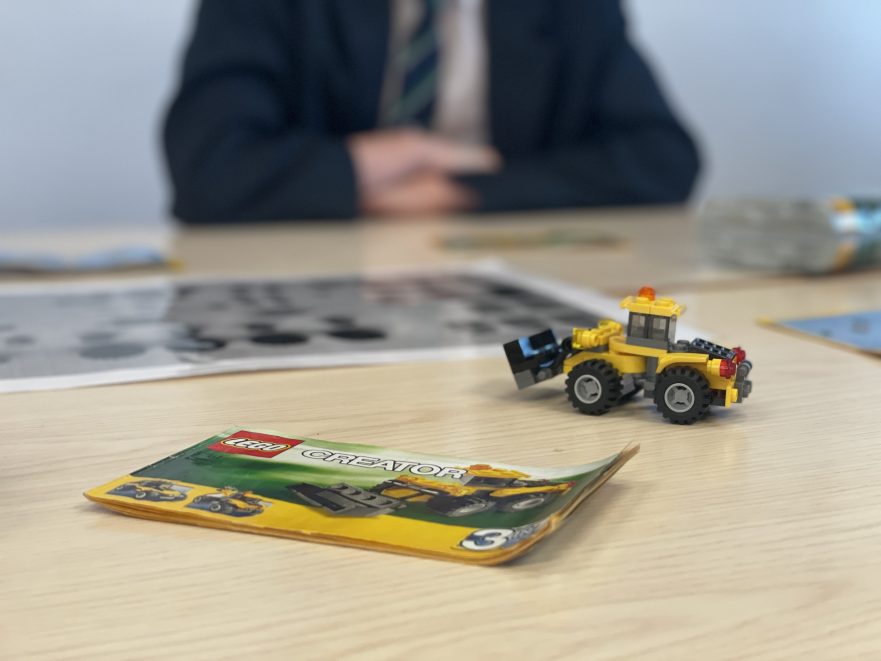
Lego Excavator Assembly
Using a Lego kit, learners simulate an industrial assembly process, aiming to complete the build in the shortest possible time. By applying LEAN techniques, learners develop an understanding of workflow optimisation, teamwork, and continuous improvement.
Bridging Education and Industry
The Toyota Engineering Challenge provides learners with a genuine insight into the expectations of the manufacturing industry. Working alongside Toyota professionals, learners experience real-world engineering standards while developing skills that are directly transferable to apprenticeships, further study, and employment.
The programme plays a key role in bridging education and industry, equipping learners with the technical knowledge, practical experience, and professional mindset needed to succeed in modern engineering and manufacturing environments.
By combining industry expertise with hands-on learning, the challenge supports our mission of Changing lives by developing the engineers and business leaders of the future.